Przykładowa opowieść
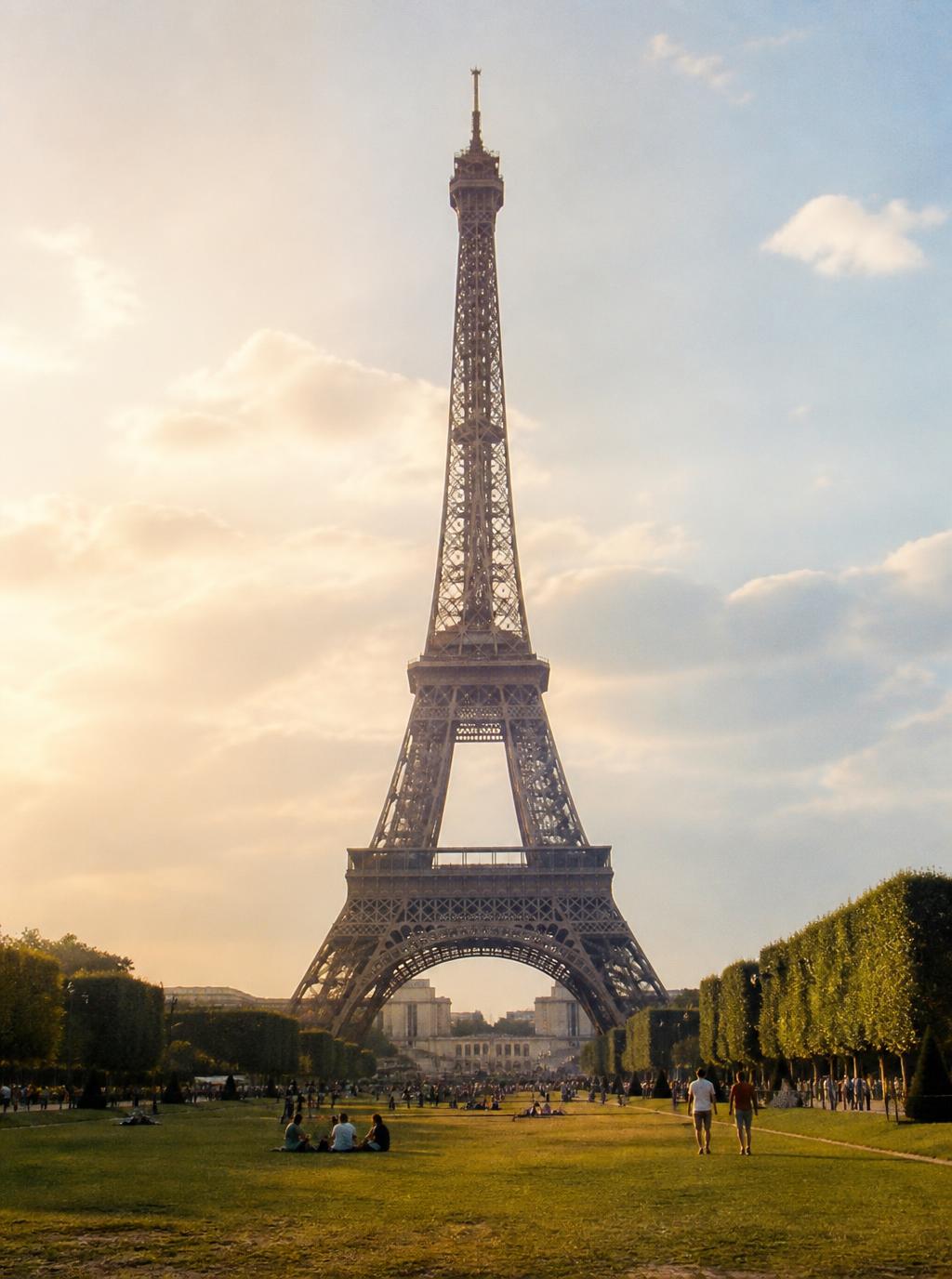
The Eiffel Tower
Champ de Mars, Paris
Location
Champ de Mars, 7th arrondissement, Paris
Built
1887 to 1889, for the World's Fair
Engineer
Gustave Eiffel's company, design by Maurice Koechlin
Height
330 metres including antennas
Material
Puddled iron, 18,038 pieces
Visitors
About 7 million a year
Historia
The Eiffel Tower was never meant to last. It went up for the eighteen eighty-nine World's Fair, built in just over two years by Gustave Eiffel's engineering company, and the permit gave it twenty years of life before the city could take it down. Parisian artists and writers hated it. They signed a furious open letter calling it a useless, monstrous tower of bolted metal that would shadow the city like a factory chimney. Today around seven million people climb it every year.
What saved it was radio. As the twenty-year deadline crept closer, Eiffel turned his tower into a giant antenna, funding wireless experiments from the top. By nineteen fourteen the French army was intercepting German messages from up there, and a tower nobody wanted had become too valuable to demolish. Its second life as a broadcast mast is the reason you can still walk under those iron arches.
Look closely and the tower is really a piece of mathematics standing upright. Eiffel shaped the curve so that wind pressure is carried straight down into the four legs, which is why it barely sways even in a storm. It is made of more than eighteen thousand iron pieces held together by two and a half million rivets, and it grows a few centimetres taller in summer as the metal expands in the heat.
It also has a hidden apartment. Near the top Eiffel built a small private room with wooden furniture where he entertained guests, including Thomas Edison. And each night, on the hour, twenty thousand bulbs make the whole structure sparkle for five minutes, an effect only added for the year two thousand celebrations.
If you want to keep walking, cross the river to the Trocadero for the classic postcard view, wander the Champ de Mars gardens where Parisians picnic at sunset, or follow the Seine to the Pont Alexandre the Third, the most extravagant bridge in the city.
Ciekawostki
- It was meant to be dismantled after 20 years; radio antennas saved it.
- Parisian artists signed a public letter calling it a monstrous tower.
- It grows a few centimetres taller in summer as the iron expands.
- Gustave Eiffel built a private apartment near the top.
- 20,000 bulbs make it sparkle for five minutes every hour after dark.
Źródła
Chcesz taką opowieść o miejscu, w którym właśnie jesteś?
Zacznij za darmo